


8 ways to get more done in Microsoft Word with less work
Move stuff around in a jiffy, delete like a pro, minimize distractions, and much more.

Love it or hate it, at 37 years and counting, Microsoft Word is old enough to run for president or have gotten divorced (maybe a couple times). It might even experience unexplainable back pain in the morning.
Word not going anywhere—at least not for a while. And even if you use it every day, there are still probably plenty of super-helpful tips, tricks, and shortcuts you haven’t discovered. Here’s a quick list of some of the more useful ones.
Note: I’m using Microsoft Word for Office 365 on a Windows 10 PC but I’ll list Mac equivalents where available.
AUTO-GENERATE SOME GIBBERISH
If you’re the type of person who likes to get something—anything—on the page just so you don’t have to stare unblinkingly into all that white space, you may be happy to know that Word puts a couple forms of dummy text close at hand.

Should you be a fan of the classic Lorem ipsum prose, simply type =lorem(4,3) and hit Enter to get four paragraphs of Lorem ipsum at a length of three sentences each. Replace the digits in the parentheses to get however many paragraphs and sentences you need, respectively.
If you’re not a fan of Lorem ipsum, then replace lorem with rand instead—for example: =rand(4,3)—to get what appears to be documentation lifted from Word’s help file.
FOCUS AND FOCUS SOME MORE
Maybe you just want to get some of Word’s distracting cruft out of the way, or maybe you want to nuke said cruft entirely.
If it’s the former, hold down the CTRL key and press F1 (Command + Option + R on a Mac) and the ribbon menu up top will collapse, leaving a minimal menu. Use the same key sequence again to get it back.
And for a truly minimal experience, click the Focus icon in the bottom of the window toward the right-hand side. It’ll serve up your page, a blinking cursor, and a blank background. Start typing away and to get the menu back, click the three tiny dots up at the very top of the screen or press the Escape key.
DOES THAT WORD MEAN WHAT I THINK IT MEANS?
It’s easy to get carried away trying to beautify your writing. So if you find yourself using a word but you’re not quite sure what it means, right click it and select the Search option about halfway down in the menu to get a definition.
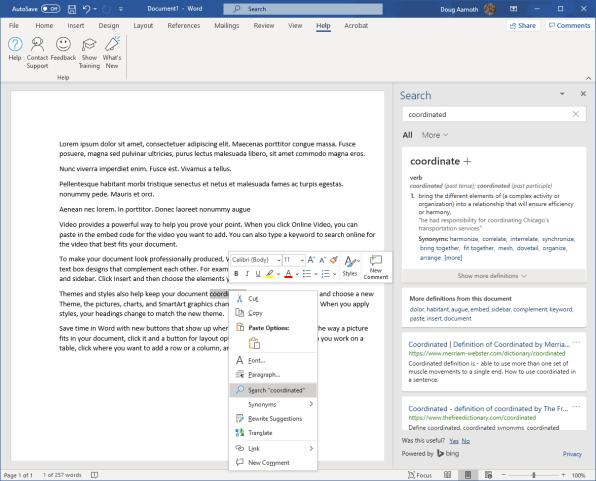
This feature also helps for looking up background info. If you’re writing about bald eagles, for instance, select the entire “bald eagles” phrase and use the Search option to learn more about bald eagles without leaving Word.
And if you’re looking for a similar but new word altogether, right-click it and select the Synonyms option for alternatives.
DELETE ENTIRE WORDS
Every bit of efficiency counts, so instead of pressing Backspace a bunch of times to delete a word, just plop your cursor at the end of it and hold down the CTRL key before you press Backspace. That’ll delete the entire word.
And just to extend this fun parlor trick in the other direction, holding down CTRL and hitting the Delete key will delete the word to the right of the cursor.
On a Mac, use the Function (fn) key + Delete and the Option key + Delete, respectively.
MOVE GIANT CHUNKS OF TEXT AROUND WITH EASE
You’ve written a dynamite paragraph. It’s so good, in fact, that you think it should be way further up the page.
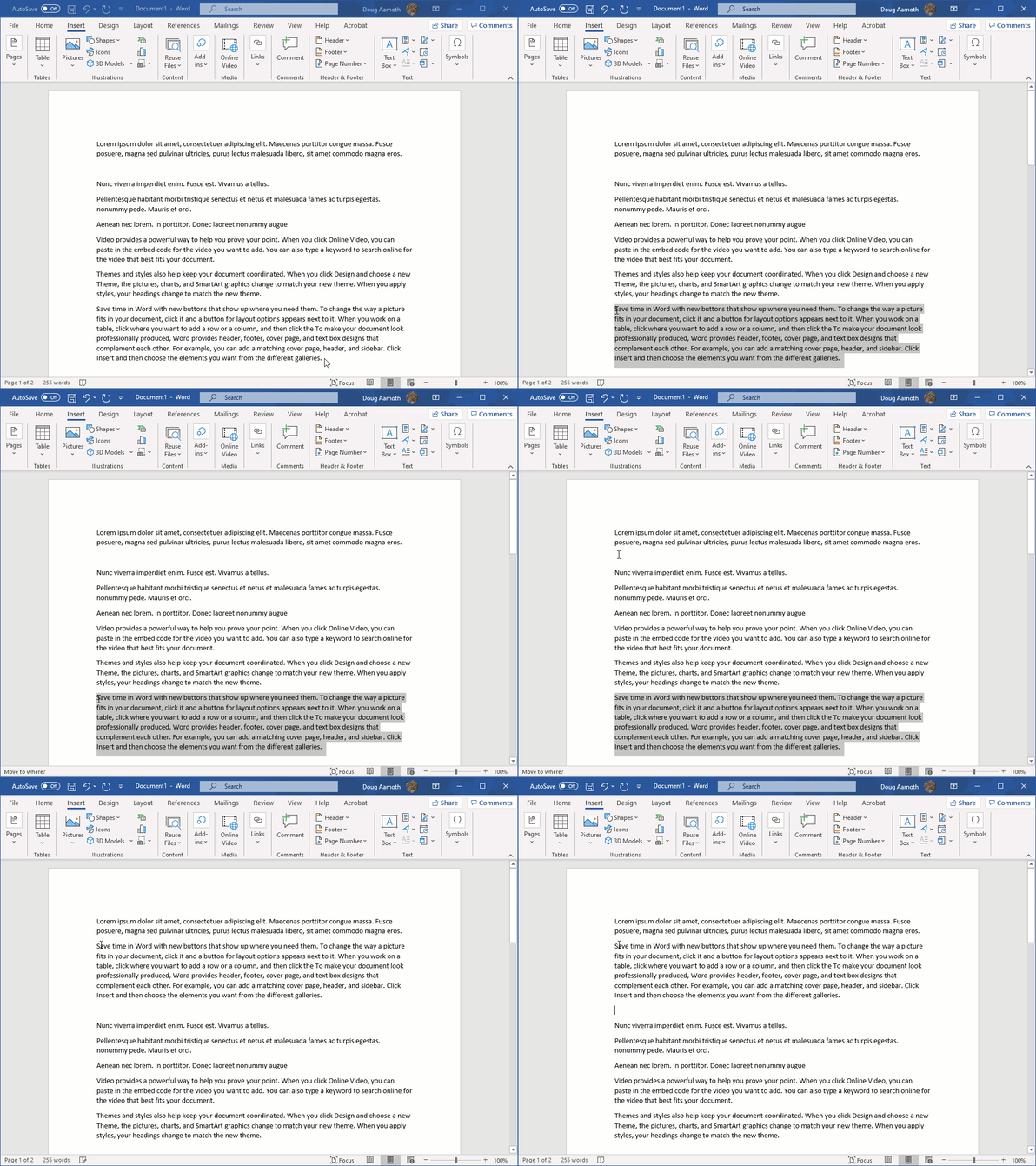
You could keystroke yourself to death by cutting it and pasting it like a barbarian, or you could simply select it, press F2, and then move your cursor to where you want it to live and press Enter. A quick whiff of ozone later, and your paragraph has found its new home.
WHERE WAS I?
If you’re editing a long document and you’ve been clicking around between several disparate pages, there’s nothing quite as frustrating as losing your place.
Thanks to Microsoft’s foresight, you can cycle your way through recent cursor positions and edit locations by holding down Shift and pressing the F5 key. It makes jumping back and forth a lot less tedious.
ADD SCREENSHOTS WITHOUT LEAVING WORD
As someone who’s dealt with a fair amount of software documentation and product screenshots for a living, I’m shocked, embarrassed, and borderline irate about all the time I’ve wasted manually grabbing screenshots and inserting them into Word.
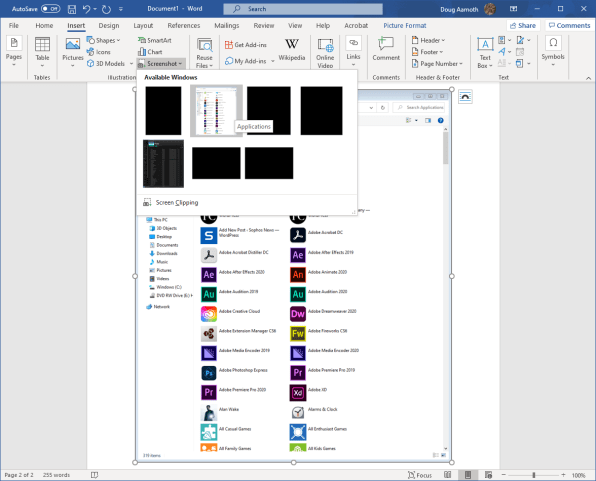
Right from the straightforwardly-named Insert menu sits the equally-straightforwardly-named Screenshot feature which, when clicked, lets you select open windows on your computer—at which point they’re elegantly deposited smack-dab into your document as a screenshot. So much time I’ll never get back!
HAVE WORD READ YOUR DOCUMENT TO YOU
By the time you’re done writing, you don’t want to read another word. No problem!
Click View up in the menu, select Immersive Reader, then click Read Aloud to have one of Microsoft’s robo-voices read your work back to you. You can select alternate voices, finesse the reading speed, and . . . oh, maybe just close your eyes for a few paragraphs.
Wearable gadgets could help catch COVID-19 before symptoms show
Early data suggests that continuous temperature monitoring could be more helpful than random fever checks.

Fever monitoring has developed something of a bad reputation under COVID-19. While having a fever is one of COVID-19’s telltale symptoms, temperature checks capture only a moment in time. Unless someone is stricken with fever, they tell us very little about a person’s state of health. But a new report suggests that body temperature can play a far more useful role in understanding health—we’re just using it wrong.
Researchers at the University of California, San Francisco, and the University of California, San Diego, have shown that constant temperature surveillance could be a promising method for detecting and predicting the onset of fever in COVID-19. In a 50-person feasibility study, researchers used the Oura Ring, a finger-worn sleep tracker, to monitor temperatures of participating healthcare workers and adult volunteers.
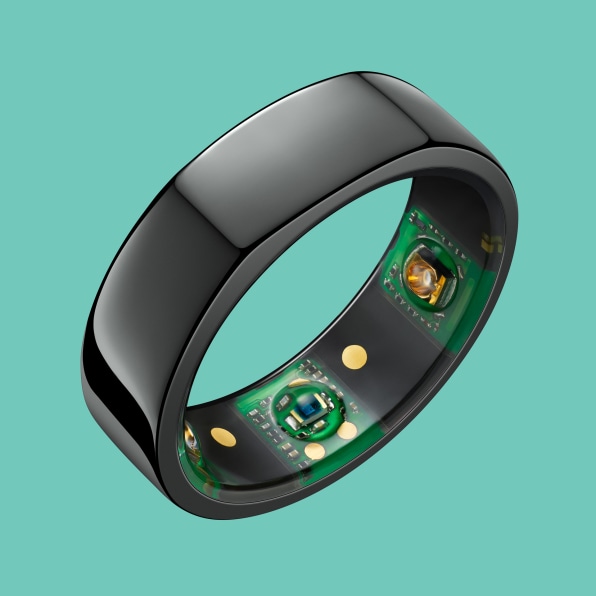
Everyone has a slightly different baseline body temperature. If that baseline starts to tick upward over a series of days, it may indicate illness. However, this study was not designed to definitively show that the Oura Ring—or any other temperature-tracking wearable—can predict COVID-19. This was merely a feasibility study, showing whether it’s possible to use this tech to conduct further studies into fever-related illness detection. Still, it represents a first step in understanding whether temperature monitoring can ultimately be used to detect or predict illness.
The study is part of an ongoing research project between UCSD and UCSF called TemPredict that hopes to understand the role body temperature, heart rate, and other physiological signals can play in predicting the occurrence of COVID-19 symptoms. The concept under investigation is whether data from wearables like the Oura Ring could be used to help public health officials navigate outbreaks like COVID-19 or even a regular flu season.
“For example, if you’re a public health official, you could have a weather map and just know a bunch of people are starting to get a fever in Seattle and [you] should go look at that,” says Benjamin Smarr, assistant professor of bioengineering and data Science at UCSD and lead author on the paper. “What this paper shows is that not only is that technically feasible, but that actually the physiology data seemed to do a much better job than the people of reporting when it is they seem like they are getting sick.”
A SLOW PROCESS
Tracking an outbreak like COVID-19 or any incident in public health can be slow moving, Smarr says. Public health officials have to wait until people are sick enough to go to a hospital or a doctor’s office and have their symptoms correlated to a particular disease. Then that data has to be reconciled with public health officials at the county level before a summary statistic is released.
“If people are willing to act as tracer particles, we could know within a day, if not in real time, where sickness events are happening,” Smarr says. Furthermore, he notes, public health officials could more quickly connect illness to either a specific disease outbreak or environmental effects such as weather, pollution, or accidents.
To use wearable-collected data would require a digital public health infrastructure that currently does not exist. The U.S healthcare system is frequently called a patchwork, but that would suggest that it’s in any way sewn together. In reality, each healthcare operator is its own carefully constructed garment. A person can amass a collection of different healthcare services, piecing them together much the way one does an outfit. This structure allows individuals to choose and shed services and systems based on what they think they need. This choice forces health systems to compete and, in theory, provide better care. In practice, it creates complications for public health efforts, as revealed by COVID-19.
While there is no public digital infrastructure currently that would allow for the kind of real-time health weather mapping that Smarr is envisioning, smart thermometer maker Kinsa has a program that gives a glimpse of what such a public health program could look like. The company works with schools that support students from low-income families to navigate flu season. Kinsa supplies families with smart thermometers and an app that records temperature data and symptoms and lets them text school nurses. School nurses get a platform where they can see anonymized temperature data for each grade. The system allows these schools and families to coordinate and reduce flu spread in schools.
Smarr says the difference between using a smart thermometer and a ring that constantly monitors body temperature is that a thermometer relies on an individual to experience symptoms and seek out a temperature measurement. It also captures only a single moment in time. The Oura Ring, by contrast, records broader and more nuanced temperature fluctuations over time, potentially giving public health authorities an ability to see an outbreak coming before it strikes.
The U.S. military is testing a version of this system. The Defense Innovation Unit, in collaboration with the Defense Threat Reduction Agency, has paired a Garmin watch, the Oura Ring, and an analytics platform designed by Philips Healthcare to spot illness among troops before symptoms arrive. So far, it seems to be able to see illness coming two days beforehand. The program started with 400 participants in June but is expanding to 5,000, according to Defense One. Meanwhile, West Virginia University Rockefeller Neuroscience Institute is running a study that uses Oura to predict illness in healthcare workers.
To create a comparable system for the greater public, health officials would have to contend with privacy concerns. “I think there should absolutely be a public authority or even just a public record of the kind of physiological events that are happening,” Smarr says. “How you secure that and scrub individual information away from that is an interesting challenge.”
For now, using temperature as a beacon for public health status is merely in the research phase. Researchers at UCSF and UCSD have given the Oura Ring to 3,400 healthcare workers in various regions of the U.S., while Oura has enrolled more than 60,000 of its users. The results of the observational study are expected sometime next year.
Need a last-minute gift? Try a subscription service and make someone happy for months to come
Subscriptions for wine, food, flowers, movies, and even a new language—these gifts keep on giving.

Want to give a gift that can be purchased and delivered in an instant, but will keep them thinking of you for all of 2021? Send a subscription to one of these digital and delivery services and delight your recipient on a monthly (or, honestly, daily) basis. Whether you want to wine and dine them with Winc and HelloFresh or teach them something new with Masterclass or Babbel, we’ve rounded up our favorite gift-able subscriptions for the holiday season.

Send fresh, sustainably grown bouquets on a monthly, bimonthly, weekly, or biweekly cadence with Bouqs Flower Subscription. You can choose between three size tiers ranging from 10 to 14 stems, with a promise of the lushest finds of the season and 30% off Bouqs’ regular prices with free shipping. Plus, subscribers receive a monthly $10 credit toward another Bouqs purchase, so they can pay it forward at any time.
MasterClass
They’ll learn from the best—really, the best—with an annual subscription to MasterClass, the streaming course platform with more than 85 A-list instructors, including singer Alicia Keys, writer Neil Gaiman, and star choreographer Parris Goebel. Currently, MasterClass has a buy one, get one promotion, so when you gift a year to an eager student, you’ll get one yourself. Just in time for Insecure powerhouse Issa Rae’s brand new class, “Creating Outside the Lines,” when it debuts in January.

Designed for budding sommelier and bodega connoisseurs alike, Winc’s monthly personalized wine subscription is a delightful gift in the midst of quarantine—or any time, for that matter. Each month, your recipient will receive three (or more) bottles curated to their personal vino taste profile. Members also get discounts on Winc’s library of bottles (most are under $20) and can swap out the company’s suggestions for personal wildcards at their whim.
Babbel
If they’re already mentally preparing for a journey abroad once the vaccine hits, Babbel will help prep their vocabulary with ease. The web and mobile language-learning program features 14 languages and uses practical, habit-based lessons and exercises to guide students of all levels.
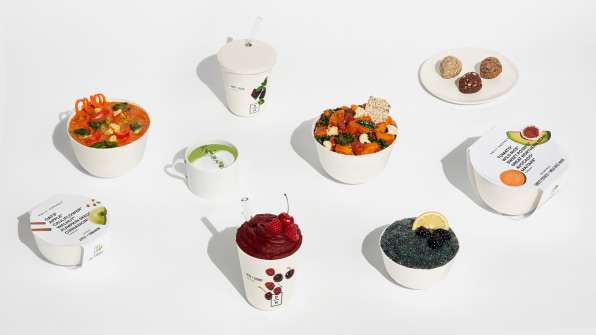
Help them kick start healthier habits in 2021 with Daily Harvest’s delivery service. Now more than a humble but hearty smoothie subscription (though they still offer those, and they are delicious), Daily Harvest now offers a wide variety of quick-prep, superfood-packed meals and snacks. They’ll have their pick of oat bowls piled high with fresh fruit and gluten- and dairy-free flatbreads with colorful vegetable toppings and cauliflower crust. Gifted subscriptions are based on a number of items or scoops (oh, yes, there’s ice cream), or a flat monetary amount so they can spend as they please.
Goldbelly
Or, indulge them. Goldbelly’s gourmet subscriptions deliver fresh-made regional delicacies every month. Maybe it’s pie . . . or pizza . . . or the best of the best, with Goldbelly taking the wheel and sending their most-loved munchies from famed restaurants and bakeries across the United States. Either way, this is any food lover’s dream come true.

There are ample reasons to love Mouth, the online mecca of meticulously vetted small-batch makers. You can share the company’s not-so-simple pleasures with someone you love via one of six subscriptions, which somehow have a little something for everyone. We particularly love the Indie States of America, which features the best treats from a particular city or region each month.

Like Winc, Driftaway Coffee creates curated experiences based on your flavor profile. The monthly subscription sends four single-origin, farmer-focused coffees—whole bean, ground, or in cold brew-ready mesh bags—in personalized compostable bags. The company’s takes taste preferences into account when building its next box while continuing to add new options to educate and expand customers’ palates.
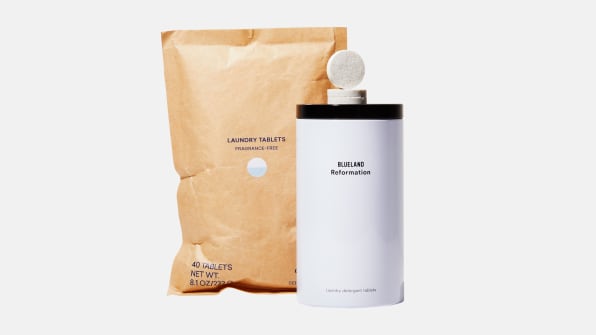
Give their cleaning supply an eco-upgrade with Blueland’s refillable kits and tablets. The company’s innovative, low-waste, multi-surface cleaners and soaps are free of harsh chemicals and utilize reusable glass Forever Bottles that take the place of up to 30 single-use cleaners with a cleaning tablet and water. If they’re as passionate about cleaning the earth as they are their bathroom, this is a spectacular, gift-worthy solution for them (and you!)
Disney+
Moving into 2021, Disney+ will continue to reveal additional exclusive content and made-for-the-theatre cinema. We’ll get way more Marvel (Elizabeth Olsen’s WandaVision premieres Jan. 15, kicking off a superhero smorgasbord in the months to come), more Star Wars (both Mandalorian spinoffs and a season 3 are on the docket), and more blockbuster hits, including Pixar’s Soul. Gift them an annual subscription, and maybe they’ll even lend you their password. (JK, buy your own!)
HBO Max
In the spirit of premium TV, giving a year to HBO Max also probably makes you a very good friend. With Gal Gadot’s triumphant return in “Wonder Woman 1984” arriving 12/25, we can’t imagine gifting a better way to spend Christmas in Quarantine.
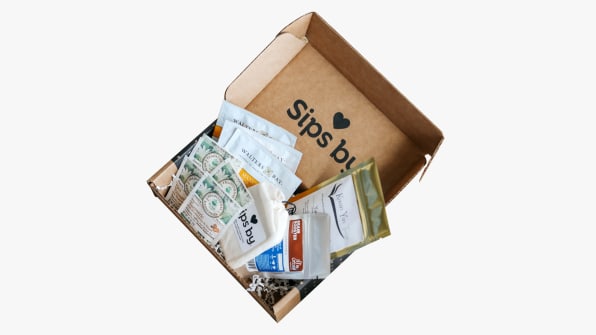
You can revive the ritual of afternoon pick-me-up via Zoom when you gift your office confidante a monthly tea subscription from Sips by. Each month, they’ll receive four hand-picked loose leaf or bagged blends from around the world with tasting notes and a muslin steeper.
Ipsy
Gift the fun of beauty discoveries with Ipsy’s monthly makeup and haircare subscription. Each Ipsy Glam Bag features five deluxe samples from popular, indie, and emerging brands—including Juliette Has a Gun, Glossier, and It Cosmetics—as well as access to pop-up sales and mystery bags on their website.
Dermstore BeautyFIX
Dermstore’s monthly subscription service sends six full- or deluxe sample-size, products picked by pros. BeautyFIX errs more on the side of skin and haircare rather color products, with previous boxes featuring items from noteworthy, premium brands like Christophe Robin, by Terry, and REN.
Fast Company may receive revenue for links to products on our site.

No comments:
Post a Comment